How to Get Your Business Recommended by ChatGPT
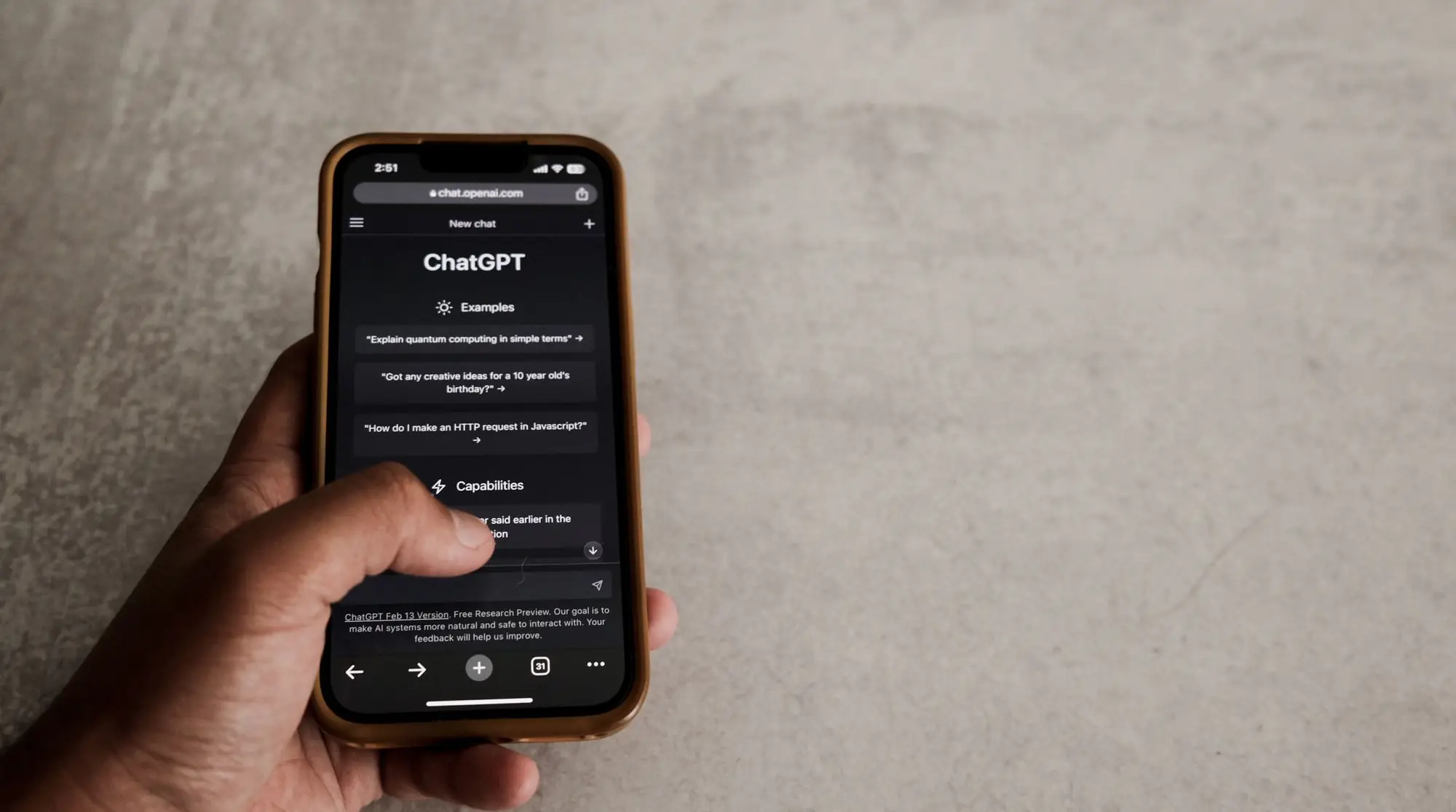
To give your business the best chance of being recommended by ChatGPT, make sure its search crawler can reach your website, claim your business in ChatGPT's new Business Hub, keep your Google Business Profile, Bing listing and directory profiles accurate, earn genuine reviews, and write service pages that answer customer questions plainly. Nobody can make ChatGPT recommend you. But you can make your business much easier for it to find, check and describe correctly. This guide shows how, with Australian removalists, trades, mechanics and clinics in mind.
The short version
- Check what ChatGPT says about your business today, and who it recommends instead.
- Allow OAI-SearchBot in your robots.txt so your site can appear in ChatGPT search answers.
- Claim your business in ChatGPT through Business Hub and keep the details current.
- Get your Google Business Profile, Bing Places listing and key directories accurate and consistent.
- Earn steady, genuine reviews, and reply to them.
- Give each service a clear page that answers the questions customers ask.
- Get mentioned on other trusted local and industry sites.
Why this matters for local businesses
OpenAI says 1.2 billion people use ChatGPT each week. BrightLocal's 2026 survey found 45% of US consumers now use ChatGPT and other AI tools for local business recommendations, up from 6% the year before. We do not have an Australian figure for local searches specifically, but Roy Morgan found 58% of Australians aged 14 and over used AI tools in March 2026. Some of your customers are already asking ChatGPT who to call.
Those questions are usually specific: "Which mechanic in Northgate is good with European cars?" or "Who is a careful removalist for a piano move in Brisbane?" ChatGPT answers with a few names, not a page of links. If you are not one of them, the customer may never see you.
How does ChatGPT find businesses?
When ChatGPT searches the web, it does not rely on memory alone. OpenAI's help centre explains the process:
- It rewrites the question into one or more targeted searches and sends them to third-party search providers. The providers OpenAI lists include Microsoft, the company behind Bing.
- It estimates the user's general location from their IP address and adds it to the search. OpenAI's example turns "good restaurants near me" into "top restaurants San Francisco". For you, that means a question about a "plumber near me" becomes a search for plumbers in a named suburb or city.
- It also uses its own crawler, OAI-SearchBot, to surface websites in its search features.
- It reads the pages it finds and writes an answer with citations, ranking results using multiple factors. OpenAI says placement is not assured.
In plain terms: ChatGPT recommends businesses it can find through search, read on the web and confirm from more than one source. Everything below improves one of those three things. This is the core of what we mean by AI SEO.
Step 1: Check what ChatGPT says about you today
Before changing anything, record a baseline. Open ChatGPT, turn on web search and ask the questions your customers ask, with your suburb or city in them. Ask the same questions in a fresh chat each time, because saved memories and earlier messages can shape the answer.
- Ask for your service in your area: "best removalist in Brisbane northside".
- Ask about your business by name: "what do people say about" followed by your business name.
- Ask comparison questions: your business name, then "vs", then a competitor's name.
- Note which businesses are named, which sources are cited, and whether anything about you is wrong or out of date.
The cited sources are the most useful part. They show you which directories, review sites and pages ChatGPT trusts for your industry and area.
Step 2: Let ChatGPT's search crawler reach your site
OpenAI runs separate crawlers for separate jobs. OAI-SearchBot is used for ChatGPT search, and OpenAI says sites that opt out of it will not be shown in ChatGPT search answers, though they can still appear as navigational links. GPTBot is a different crawler used for training OpenAI's models, and you can block it without affecting search.
- Open yoursite.com.au/robots.txt and check that OAI-SearchBot is not blocked.
- Ask your web host or developer whether a firewall or security plugin blocks OpenAI's published crawler IP addresses. This is a common hidden cause.
- Make sure your key information is in the page text, not only in images, PDFs or scripts.
- OpenAI says changes to robots.txt can take about 24 hours to take effect for search.
Step 3: Claim your business in ChatGPT
On 10 November 2026 OpenAI launched Businesses in ChatGPT in beta. Through Business Hub, a business can claim its organisation in ChatGPT and, once verified, update key details. OpenAI says any eligible business located where ChatGPT is available can claim its business. When a business appears in a ChatGPT answer, people can click through to its ChatGPT profile.
Business Hub also shows aggregated insights: how many times your business is mentioned, how many website clicks you get from ChatGPT, and the common topics in conversations where your website is cited. That gives you a first party view of your ChatGPT visibility that did not exist before.
Step 4: Get your listings right everywhere
Because ChatGPT relies on search providers and on other websites, your listings are part of what it reads. Start with the big three:
- Google Business Profile. Google says local ranking depends on relevance, distance and prominence, and that prominence draws on reviews and links to your business. A complete profile with the right categories, services, service areas, hours and photos also feeds Google's own AI answers.
- Bing Places for Business. Bing is easy to forget in Australia, but Microsoft is one of the search providers ChatGPT uses. Claim your listing and make it match your Google profile.
- Industry and local directories. For removalists, trades, mechanics and clinics, the directories and associations ChatGPT cited in your Step 1 check are the ones to fix first.
Use exactly the same business name, address, phone number and website on every listing. When sources disagree, an AI has less reason to be confident about who you are.
Step 5: Earn genuine reviews
Reviews give ChatGPT something to say about you. When someone asks for a "reliable" or "careful" business, the answer tends to lean on what customers have written. Ask every happy customer for a review, make it easy with a direct link, and reply to reviews, including the bad ones. Specific reviews help most: "moved our piano from Ascot to Paddington without a scratch" tells an AI far more than "great service". Never buy or script reviews. Apart from breaking platform rules, they are a risk to your reputation that no visibility gain is worth.
Step 6: Write service pages ChatGPT can quote
ChatGPT writes its answer from passages it can lift and cite. Pages that answer questions plainly are easier to quote than pages full of slogans.
- One page per main service, with the service and area in the heading.
- A clear first paragraph: what you do, where, and for whom.
- The details customers ask about: what affects the cost, how long it takes, what is included, licences and insurance.
- Real local detail: suburbs you cover, jobs you have done, photos of your team and vehicles.
- A short FAQ section with the questions you hear on the phone every week.
These are the same pages that rank in Google, and Google's ranking systems keep shifting, as the November 2026 core update showed. Good service pages hold up through both.
Step 7: Get mentioned on other trusted sites
AI answers lean heavily on the wider web. In Ahrefs' study of Google AI Overviews, 36.7% of cited pages did not rank in Google's top 100 at all. ChatGPT is a different product, but the lesson carries over: what other sites say about you matters as much as your own website. Useful mentions for local businesses include local news, industry associations, suppliers and partners, community sponsorships, and "best of" lists written by genuine local publishers.
How long does it take?
Crawler access can be fixed in a day. Profile, listing and page improvements take a few weeks. Reviews and mentions build over months. ChatGPT's answers also vary between users and from day to day, so judge progress by repeating your Step 1 question set every month, alongside your Business Hub insights and enquiry numbers, not by one screenshot.
Can an agency make ChatGPT recommend my business?
No, and be careful of anyone who says they can. Nobody controls what ChatGPT says. What an agency can do is work through the steps above properly, measure your visibility against a baseline and report honestly on what moved. That is how our AI SEO services work. If you want the bigger picture first, read what AI SEO is and how it differs from traditional SEO.
Find out what ChatGPT says about you
If you would rather not run the checks yourself, book a free AI visibility check. We ask ChatGPT and the other major AI tools the questions your customers ask, compare you with three competitors and show you what each one says.
Sources
- OpenAI: Introducing Businesses in ChatGPT
- OpenAI Help Center: Searching the web with ChatGPT
- OpenAI: Overview of OpenAI Crawlers
- BrightLocal: Local Consumer Review Survey 2026
- Roy Morgan: Artificial Intelligence (AI) tools usage, March 2026
- Google Business Profile Help: Tips to improve your local ranking on Google
- Ahrefs: 38% of AI Overview Citations Pull From The Top 10
Related Articles
What Is AI SEO? A Plain English Guide for Australian Businesses
AI SEO is the work of getting your business named and cited when an AI writes the answer. Here is how AI answers choose their sources, how AI SEO differs from traditional SEO, what the work involves and how to measure it.
SEOGoogle's November 2026 Core Update: What Happened and What to Do
Google started its third core update of 2026 on 10 November. Here are the confirmed facts, what it means for Australian service businesses, and a step by step plan for checking your rankings without panicking.